When Labels Do More Harm Than Good
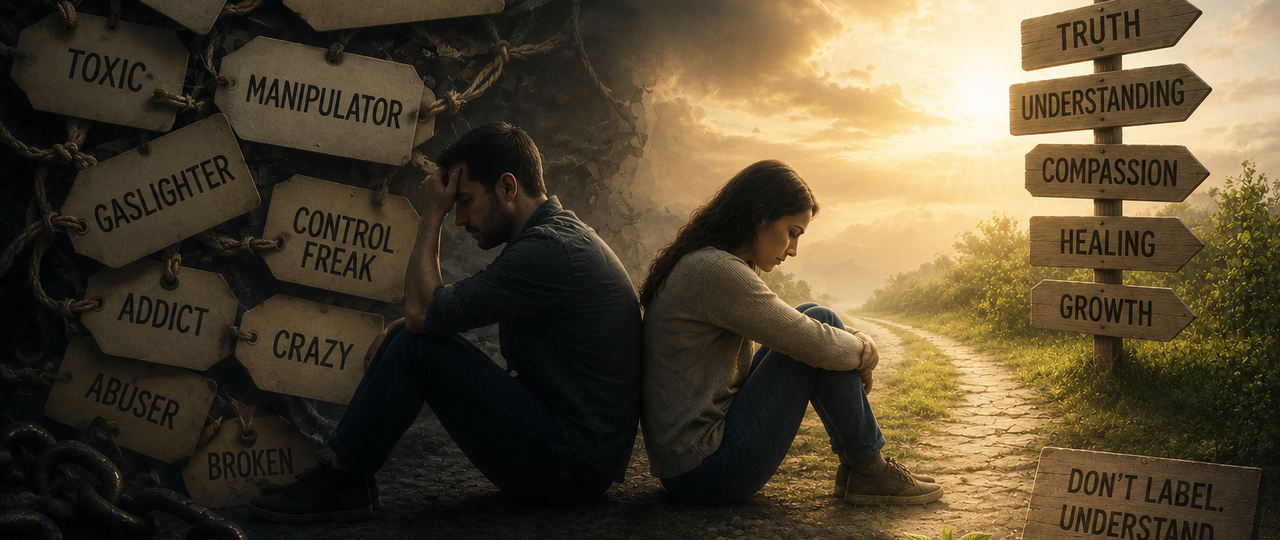

Is it okay to diagnose my spouse as a narcissist?
No. Clinical disorders are real, and naming genuinely harmful or abusive patterns can be life-saving, but casual labels borrowed from social media often miss. Selfishness is not narcissism. Poor boundaries are not codependency. A label can villainize instead of help you understand, and it quietly declares a person unchangeable, which Matthew 19:26 denies: with God all things are possible. Healing comes through truth, humility, and qualified help.
We Need Caution, Discernment, and God’s Grace in the Age of Self-Diagnosis
We live in a culture that’s obsessed with labels.
Scroll through your feed and you’ll see it:
“Narcissist.”
“Codependent.”
“Gaslighter.”
“Trauma bond.”
“Borderline.”
“Manipulator.”
Some are self-diagnosing. Others are diagnosing their spouse, their boss, their in-laws, or their pastor.
And while some of these terms can bring language and clarity to real struggles-they can also become weapons. Dangerous ones.
The Problem with Pop-Psychology Diagnoses
Let’s be clear: there are people who genuinely suffer from clinical disorders. There are also individuals whose patterns are harmful, manipulative, or abusive-and naming those realities can be life-saving.
But when we casually throw around labels-especially without a professional diagnosis-we run into real problems:
1. You might be wrong.
Psychological conditions are complex. Just because someone is selfish doesn’t make them a narcissist. Just because someone struggles with boundaries doesn’t mean they are co-dependent. Mislabeling people can create confusion, fear, and injustice.
2. Labels can become a way to villainize instead of understand.
It's easier to say, “He's a narcissist,” than to say, “I'm hurting and don’t know what to do.”
It’s easier to say, “She’s codependent,” than to admit, “We both have some patterns to work on.”
But healing doesn't come from labeling-it comes from truth, humility, and sometimes, help.
3. It keeps people stuck.
When we slap a label on someone, we may unintentionally declare them unchangeable. That’s not only unfair-it’s unbiblical.
“With man this is impossible, but with God all things are possible.”
- Matthew 19:26 (NIV)
4. Labeling Can Inhibit Reconciliation
When you label someone - such as calling them a narcissist - without a proper diagnosis, you risk creating a mental narrative that dehumanizes them. This not only distances them from your empathy, but it can also hinder the possibility of reconciliation. Instead of seeing them as a person in need of grace and healing, you begin to view them as a "monster" rather than a human being in need of a Savior.
Related Article: Are You Codependent? 10 Signs You Could Be
When a Label Is Necessary
Now, let’s be clear: some behaviors do need to be named.
If someone is abusive, controlling, manipulative, emotionally damaging, or habitually deceptive, there’s no virtue in minimizing the issue. You may need boundaries, intervention, or to remove yourself from danger.
In those cases, seeking professional help, counseling, or pastoral care isn’t just wise-it’s critical.
But posting about it, ranting in group chats, or diagnosing your spouse with TikTok terms? That’s not healing-that’s often just projecting.
Don't Diagnose What Only God Can Redeem
Get the Best of Soul Refiner in Your Inbox
Join over 100,000 readers and receive practical insights, encouragement, and resources for healing, growth, and restoration delivered straight to your inbox.
No spam. We'll never sell or share your email, and you can unsubscribe anytime.
By signing up, you agree to our Privacy Policy.
People can change. Hearts can be transformed. But not through shame… or armchair psychology… or social media hashtags.
True change comes from the inside out-and only God can do that kind of work.
"And I will give you a new heart, and a new spirit I will put within you. And I will remove the heart of stone from your flesh and give you a heart of flesh." - Ezekiel 36:26
But change also requires desire. We cannot force repentance. We cannot manufacture humility.
We can pray, set boundaries, speak truth-but only the Holy Spirit can convict and restore.
Related Article: World Health Organization Calls Sex Addiction a Disorder
What to Do Instead of Labeling
- Start with prayer and humility.
Ask God to search your heart first (Psalm 139:23–24). Ask for wisdom before judgment. - Seek godly counsel.
Not everyone needs therapy-but some situations do. Invite in a trusted pastor, counselor, or professional if there are serious concerns. - Focus on behaviors, not labels.
You don’t need a diagnosis to set boundaries. You can say, “This is not okay,” without saying, “You are a narcissist.” - Remember the cross covers everyone.
Even if the person in your life is deeply flawed, God’s grace is still available. That doesn’t mean you tolerate sin-but it means you never stop praying for transformation.
Because No One Is Beyond Redemption
Your spouse may have serious issues. You may feel stuck in a hard marriage. You may be grieving the version of the person you thought you married. But before you slap on a label and walk away emotionally, ask the deeper questions:
- Have I sought wise counsel?
- Am I acting out of pain, or out of truth?
- Am I hoping for redemption, or settling for resentment?
Because no matter how broken someone may be - God can heal. But, it hinges on whether that person is seeking healing.
The real diagnosis we all share is one Scripture already gave us:
“All have sinned and fall short of the glory of God…” - Romans 3:23
“But God demonstrates His own love for us in this: while we were still sinners, Christ died for us.” - Romans 5:8
There is no pit too deep. No pattern too hard. No heart too cold.
But healing doesn’t come from a label. It comes from truth, surrender, and the transforming grace of God.
For more on this topic, see the silent marriage killer, how to safeguard your family online, and why 68% of Christian men watch porn.

Equipping women and couples with biblical wisdom, practical tools, and compassionate guidance to pursue healing, and strengthen relationships.
More articles by Tiana Wiles →Frequently Asked Questions
When is it right to name abusive behavior for what it is?
When the behavior is genuinely abusive, controlling, manipulative, emotionally damaging, or habitually deceptive. There is no virtue in minimizing any of that. In those situations you may need firm boundaries, intervention, or to remove yourself from danger entirely, and seeking professional help, counseling, or pastoral care is not overreacting. It is critical.
How do I set boundaries without labeling my spouse?
Focus on behaviors rather than diagnoses. You do not need a clinical term to protect yourself. You can say clearly, this is not okay, without saying, you are a narcissist. Naming the specific action keeps the conversation about something that can actually change, while a label about their identity mostly ends the conversation and leaves you both nowhere.
Can someone with deeply harmful patterns really change?
Yes. Ezekiel 36:26 records God's promise to remove the heart of stone and give a heart of flesh, and no pattern is too hard for that. But change also requires desire. You cannot force repentance or manufacture humility in another person. You can pray, set boundaries, and speak truth, and then trust that only the Holy Spirit can convict and restore.
What should I do before deciding what my spouse's problem is?
Start with prayer and humility rather than a verdict. Psalm 139:23-24 is the right opening move: ask God to search your own heart first, and ask for wisdom before judgment. Then seek godly counsel. Not every situation needs therapy, but some clearly do, and inviting in a trusted pastor, counselor, or professional beats diagnosing from your own pain.
Why is venting about my spouse online so harmful?
Because posting about it, ranting in group chats, or reaching for borrowed terminology is usually projecting rather than healing. Worse, it builds a mental narrative that dehumanizes the person, which pushes them outside your empathy and quietly forecloses reconciliation. Once you see someone as a monster rather than a human being in need of a Savior, grace has nowhere to land.
How to Quit Pornand Find Lasting Freedom
Discover the biblical and neuroscience-based approach that has helped millions of men and
over 50,000 churches break the addiction cycle and pursue lasting freedom.
No Credit Card Needed
Recommended Articles
 Betrayal Trauma
My Husband Watches Porn: What Now?
If your husband watches porn, the shock and grief you feel have a name — betrayal trauma. Here's what's real, what isn't your fault, and what to do next.
 Marriage
Marriage Counseling for Porn Addiction
What to expect from marriage counseling for porn addiction, why couples counseling alone often fails, and what has to happen for healing to hold.
 Porn Recovery
Why does my husband choose porn over me?
The question burning in your chest is why you were not enough. That question starts with a false premise. His porn use began as a choice and became a rewired brain chasing a chemical, which explains the behavior without excusing it. Here is what that means for him, and what it means for your own healing.