Resentment After Betrayal Kills
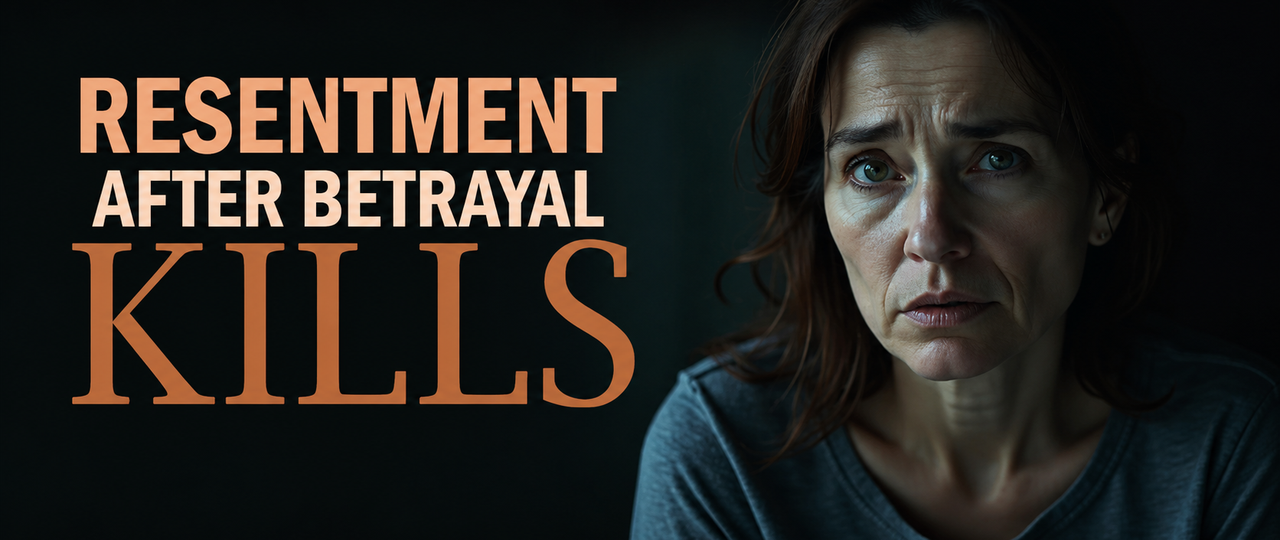

Why should I let go of resentment after being betrayed?
Because holding it punishes you, not the person who betrayed you. Your anger is a legitimate response to a real wound. But chronic resentment keeps stress hormones spiked, which affects blood pressure and immunity. It darkens how you see everyone, turns criticism inward, leaks into your other relationships, and blocks healing. Hebrews 12:15 warns that a root of bitterness springs up and defiles. Forgiveness does not excuse what happened. It refuses to let it keep poisoning your future.
If you've been betrayed-whether it was your husband, a partner, a close friend, or someone you trusted deeply-resentment probably feels like the only thing keeping you afloat right now. It's that hot, protective anger that says, "No one gets to hurt me like that again." And honestly? You have every right to feel it. The pain is real, the wound is deep, and pretending otherwise would be unauthentic.
If you recognize this in your own story, healing from betrayal trauma may help.
But here's the straight talk: letting that resentment take root and turn into full-blown bitterness isn't punishing the betrayer-it's punishing you. It keeps you chained to the very person or situation that already stole so much from you.
Forgiveness isn't about letting the betrayer off the hook or saying what they did was okay. It's about refusing to let their actions keep poisoning your life, your body, your heart, and your future.
The Bible puts it plainly in Hebrews 12:15-watch out so no "root of bitterness" springs up and causes trouble, defiling everything (and everyone) around it. Resentment works exactly like that root: it digs in deep and spreads.
Let me lay out, why clinging to it hurts you more than anyone else:
1. It literally makes your body sick.
Chronic resentment and bitterness keep your stress hormones spiked-like living in fight-or-flight 24/7. Research backs this up: it can raise your blood pressure, increase your risk of heart issues, weaken your immune system (making you catch every bug going around), cause headaches, digestive problems, chronic pain, and even contribute to inflammation that fuels bigger health troubles.
Your body wasn't built to carry this load forever. You're worth more than letting his betrayal give you high blood pressure or a wrecked immune system.

Related Article: 5 Reasons To Reject Resentment
2. It warps how you see the world.
Over time, resentment hands you a pair of shattered glasses. Everything starts looking negative. Good moments? You miss them. Kind people? You question their motives. Opportunities for joy, connection, or even just a peaceful day? They slip away because you're scanning for the next betrayal.
The redemption love and grace of Christ provides a way for us to see in color again after betrayal, not just shades of gray.
3. It turns the criticism inward.
That harsh inner voice that tells you you're not enough, that you should've seen it coming, that you're broken or unlovable? Resentment feeds it. You become your own worst enemy-grumpy with others, but even harder on yourself. The enemy loves planting those seeds, and bitterness waters them. You're already healing from someone else's damage; don't add self-inflicted wounds on top.

Get the Best of Soul Refiner in Your Inbox
Join over 100,000 readers and receive practical insights, encouragement, and resources for healing, growth, and restoration delivered straight to your inbox.
No spam. We'll never sell or share your email, and you can unsubscribe anytime.
By signing up, you agree to our Privacy Policy.
Related Article: 8 Ways To Conquer Resentment After Betrayal
4. It poisons your relationships.
At first, the resentment is laser-focused on the one who hurt you. But unchecked, it leaks out. Small things from other people set you off. You snap at your kids, pull away from friends, or assume the worst in new connections. Before you know it, you're isolated, and the betrayal has stolen even more relationships from you. You don't want that. You deserve real, safe connections-not walls built from old pain.
5. It blocks your healing.
If you're trying to rebuild your marriage, or even just rebuild yourself after walking away, resentment is like pouring concrete over the cracks before they've had a chance to mend. It keeps you stuck-replaying the hurt, reliving the anger, staying emotionally tethered to the past. True reconciliation (if that's your path) or genuine peace (either way) can't grow in that soil. Letting go isn't weakness; it's reclaiming your power so you can finally move forward.
Ephesians 4:31-32 says it direct: Get rid of all bitterness, rage, anger, brawling, and slander-along with every form of malice. Be kind and compassionate to one another, forgiving each other, just as in Christ God forgave you.

This isn't about being a saint or faking niceness. It's about choosing not to drink poison and expect him to die from it. Holding onto resentment brings more pain-mental fog, physical exhaustion, a lifetime of damage-to you.
You’ve already survived the betrayal. Now choose to survive it without letting it define the rest of your life. Release the grip resentment has on you-not for him, but for the woman you are becoming. Healing is waiting on the other side. You’ve got this. One step, one honest prayer, one intentional release at a time.
You've been through hell. Don't let resentment keep you there.
Tiana Wiles
Co-founder, Soul Refiner and Host of From The Ashes
If you're healing from betrayal, these posts may help: full disclosure, commitment, and honesty, healing beyond betrayal, and trading sin for the grace Christ offers.

Equipping women and couples with biblical wisdom, practical tools, and compassionate guidance to pursue healing, and strengthen relationships.
More articles by Tiana Wiles →Frequently Asked Questions
Is it normal to feel this angry after being betrayed?
Yes. The pain is real, the wound is deep, and pretending otherwise would not be honest. That hot, protective anger is the part of you saying no one gets to hurt me like that again, and you have every right to feel it. The danger is not the anger itself but letting it take root and harden into bitterness, because that is where it stops protecting you and starts costing you.
Does forgiving betrayal mean I have to stay in the marriage?
No. Forgiveness is not the same as reconciliation, and it is not letting the betrayer off the hook or saying what he did was okay. It is refusing to let his actions keep poisoning your life, your body, your heart, and your future. Whether you rebuild the marriage or rebuild yourself after walking away, releasing resentment is what makes genuine peace possible on either path.
How does bitterness affect your physical health?
Chronic resentment keeps your stress hormones spiked, like living in fight-or-flight around the clock. Research links that state to raised blood pressure, higher risk of heart issues, a weakened immune system, headaches, digestive problems, chronic pain, and inflammation that fuels bigger troubles. Your body was never built to carry that load forever. You are worth more than letting someone else's betrayal wreck your health too.
What does Hebrews 12:15 mean by a root of bitterness?
Hebrews 12:15 warns us to watch out so that no root of bitterness springs up, causes trouble, and defiles everything and everyone around it. Resentment works exactly like that root. It digs in deep and spreads underground until it touches everything. Ephesians 4:31-32 gives the same instruction plainly: get rid of all bitterness, rage, anger, brawling, slander, and malice, and be kind and compassionate instead.
How do I actually start letting go of resentment?
One step, one honest prayer, one intentional release at a time. This is not about faking niceness or performing sainthood. It is choosing to stop drinking poison and expecting him to be the one who suffers from it. Name what the resentment is costing you in your body, your outlook, your self-talk, and your other relationships. Then release the grip, not for him, but for the woman you are becoming.

How to Quit Pornand Find Lasting Freedom
Discover the biblical and neuroscience-based approach that has helped millions of men and
over 50,000 churches break the addiction cycle and pursue lasting freedom.
No Credit Card Needed
Recommended Articles
 Betrayal Trauma
My Husband Watches Porn: What Now?
If your husband watches porn, the shock and grief you feel have a name — betrayal trauma. Here's what's real, what isn't your fault, and what to do next.
 Betrayal Trauma
When Labels Do More Harm Than Good
Narcissist. Codependent. Gaslighter. Trauma bond. Scroll far enough and there is a term for everyone in your life, and it feels like clarity. Sometimes it is. Often it is a way to villainize instead of understand, and it quietly declares a person beyond change. Scripture says otherwise.
 Betrayal Trauma
Will I Ever Want to Be Intimate Again After Betrayal?
Your body tenses at his touch and then the shame arrives: what is wrong with me? Nothing is. Betrayal registers in the brain as trauma, and intimacy requires safety your nervous system does not have yet. Written woman to woman, this is what is actually happening and what rebuilds desire over time.